
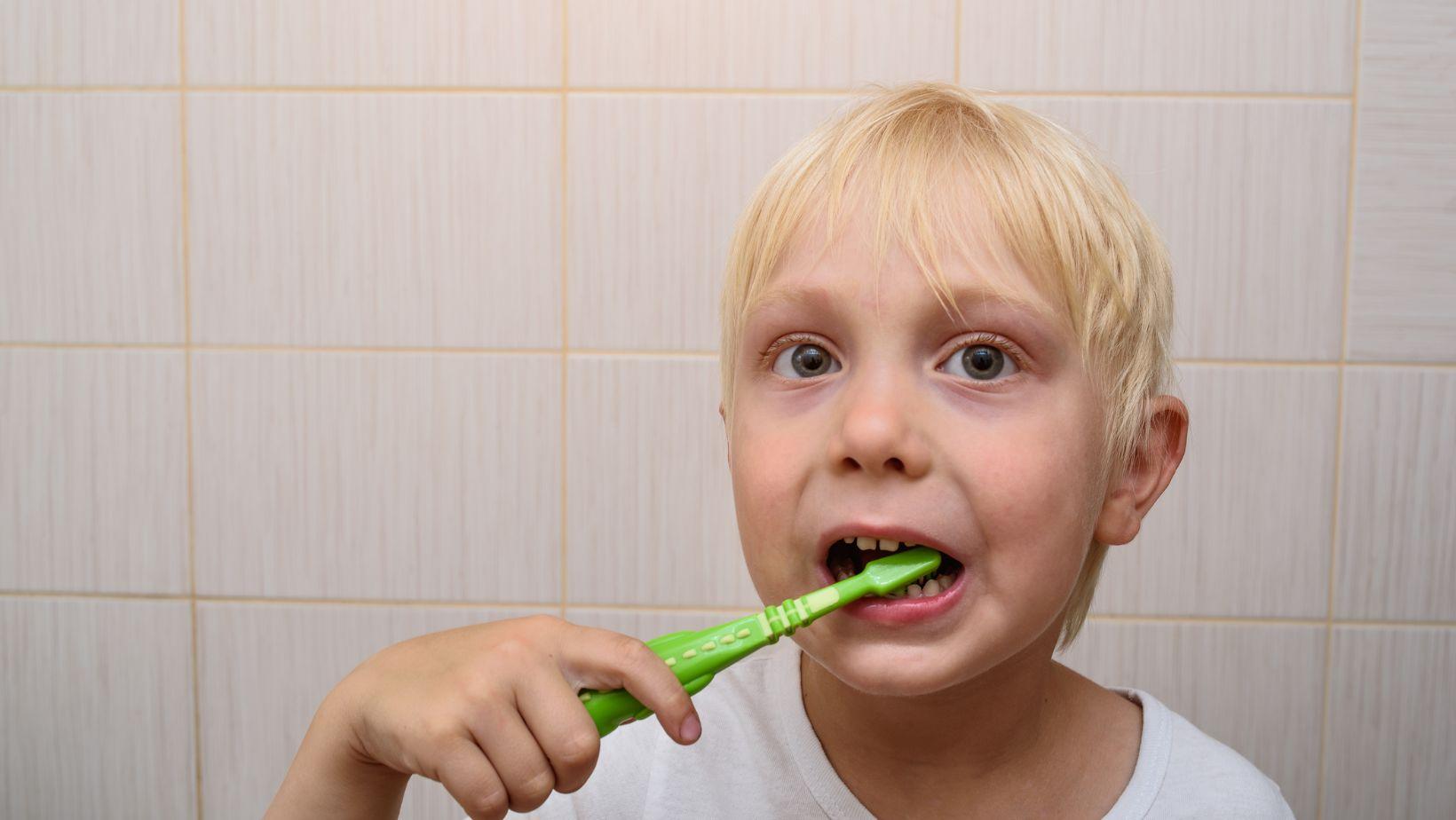
Do you worry that your child skips brushing or gets cavities? Kids who start good dental habits early lower their risk of tooth decay. This post gives clear steps to build daily routines, teach proper brushing, and limit sugary snacks.
Read on to protect their smile.
Start Dental Care Early
Start dental care as soon as your baby is born. Wipe their gums after feedings to keep them clean.
Wipe gums after feedings
Use a clean, soft cloth or gauze to wipe an infant’s gums after feedings. This removes milk residue and lowers plaque and the risk of tooth decay. It helps oral hygiene and starts good dental care habits.
Wiping can also calm a fussy baby. Parents should avoid toothpaste until the first tooth appears.
Brush as soon as the first tooth appears
Clean the new tooth gently after feedings. A soft infant toothbrush removes plaque without hurting the gum. Apply a rice grain amount of fluoride toothpaste for children under three.
Parents should wipe or brush twice daily to lower the risk of tooth decay.
Start regular brushing right away to build good oral hygiene. Try short, gentle circular brushing techniques on all tooth surfaces. Parents must watch and help until the child can brush well alone.
Schedule dental visits by the first birthday to check growth and fluoride needs.
Parents can seek guidance from local experts in pediatric dentistry in Fullerton to ensure their children develop healthy dental habits.
Establish a Brushing Routine
To keep teeth strong, brush twice a day. Use the right amount of fluoride toothpaste and make it fun for kids.
Use the right amount of fluoride toothpaste
Use a smear of fluoride toothpaste for babies under 3, just a thin line on a soft toothbrush. For kids 3 to 6, put a pea-sized amount on the brush. Fluoride helps strengthen enamel and fight tooth decay.
Parents should supervise brushing and teach proper toothbrush techniques. A small amount of paste reduces fluoride swallowing while supporting cavity prevention. Pediatric dentistry recommends these steps for good oral hygiene and kids’ health.
Brush twice daily for two minutes
Brush teeth two times each day. Each time, brush for two minutes. This helps remove plaque and food particles. Use a pea-sized amount of fluoride toothpaste to protect against tooth decay.
Make sure kids get into this habit early.
Set a timer or play a song to make brushing fun. Supervision is key for young children. Help them with the proper techniques until they can do it well on their own. Regular brushing keeps smiles bright and healthy.
Teach Proper Techniques
Teach your child how to brush correctly. Show them how to move the toothbrush in small circles and reach every tooth.
Supervise brushing until age 7 or 8
Supervision is key for young children during brushing. Kids need help to brush properly until they are around 7 or 8 years old. They may not use enough toothpaste or miss spots on their teeth.
Stand by as they brush to guide them in the right direction.
Check that they use a pea-sized amount of fluoride toothpaste. This helps fight tooth decay and strengthens enamel. Make sure they reach all areas, especially the back teeth, where plaque can build up easily.
Encouragement and praise during this time can make brushing more fun and effective for kids’ health.
Introduce flossing when teeth touch
Flossing starts when teeth touch. This helps remove food and plaque stuck between them. Children need to learn this step for good oral hygiene. Teach them how to use floss properly.
Show them the right amount of floss to use and let them practice gently.
Kids should floss at least once a day. Make it part of their routine, like brushing teeth. By starting early, they will keep healthy habits as they grow up. Flossing reduces the chance of tooth decay in hard-to-reach spots.
Promote Healthy Dietary Habits
Healthy eating is key for strong teeth. Offer fruits and vegetables instead of sugary snacks to keep cavities away.
Limit sugary snacks and drinks
Limit sugary snacks and drinks. These foods can lead to tooth decay. Sugar feeds the bacteria in the mouth. This creates acid, which harms teeth.
Choose healthier options instead. Fresh fruits and vegetables make good snacks. Water is a great drink choice, too. Milk also helps keep teeth strong because of its calcium content.
Reducing sugar intake protects your child’s smile and promotes better oral hygiene habits for life.
Avoid bedtime bottles with milk or juice
Bedtime bottles filled with milk or juice can harm your child’s teeth. The sugars in these drinks can stay on the teeth all night. This can lead to tooth decay and cavities. Instead of letting kids fall asleep with a bottle, offer water instead.
Teach them to drink from a cup as they grow older.
Healthy dental habits start early. Encourage good choices at bedtime for better oral hygiene. Keep sugar intake low, especially before sleep, to protect those tiny teeth. These small adjustments can make a significant difference in their dental care and overall health.
Make Dental Care Fun and Engaging
Make dental care fun for kids. Use timers with music or sticker charts to keep them excited about brushing their teeth.
Use musical timers or sticker charts
Musical timers make brushing fun and exciting. They can play a favorite song for two minutes, which is the perfect time to brush. This helps kids focus on their task while enjoying themselves.
Sticker charts also work well. Kids love earning stickers for completing tasks like brushing teeth twice a day.
These tools encourage good habits early in life. Positive reinforcement keeps children motivated to care for their teeth. With these methods, kids start to understand the importance of dental care from an early age.
Healthy habits form when they associate dental routines with fun activities and rewards.
Reward consistent habits
Praise good habits often. Use small rewards to encourage kids. Stickers, extra playtime, or a special treat work well. These rewards help create positive feelings about dental care.
Create a fun chart to track progress. Mark days when kids brush and floss without being reminded. Celebrate achievements together; this makes healthy habits even more enjoyable for them.
Schedule Regular Dental Checkups
Schedule regular dental checkups to keep teeth healthy. Start with a visit by your child’s first birthday and continue every six months for cleanings.
First visit by the first birthday
The first dental visit should happen by the time your child turns one. This checkup helps catch any early signs of tooth decay. A dentist will look at your child’s teeth and gums. They can give you tips on how to care for them.
Regular checkups are important too. Schedule visits every six months after the first appointment. These routine visits help keep their smile healthy and strong as they grow. Early dental care sets a good foundation for lifelong oral hygiene habits.
Routine cleanings every six months
Following the first visit, schedule routine cleanings every six months. Regular visits help keep teeth healthy and strong. Dentists can spot problems early. They can remove plaque that brushing may miss.
Cleanings prevent tooth decay and gum disease.
Kids who have consistent checkups are more likely to develop good dental habits. These appointments also help kids feel comfortable in the dentist’s office. It builds trust between them and their dental care team.
Investing time in these visits promotes a lifetime of oral hygiene success.
Conclusion
Building good dental habits needs early actions. Start when your child is a baby by wiping their gums. Brush teeth as soon as they come in. Make brushing fun and easy; use music or stickers to keep kids interested.
Regular checkups help catch problems early and keep smiles bright. Healthy teeth today lead to strong teeth tomorrow, so start now!










Discussion about this post