
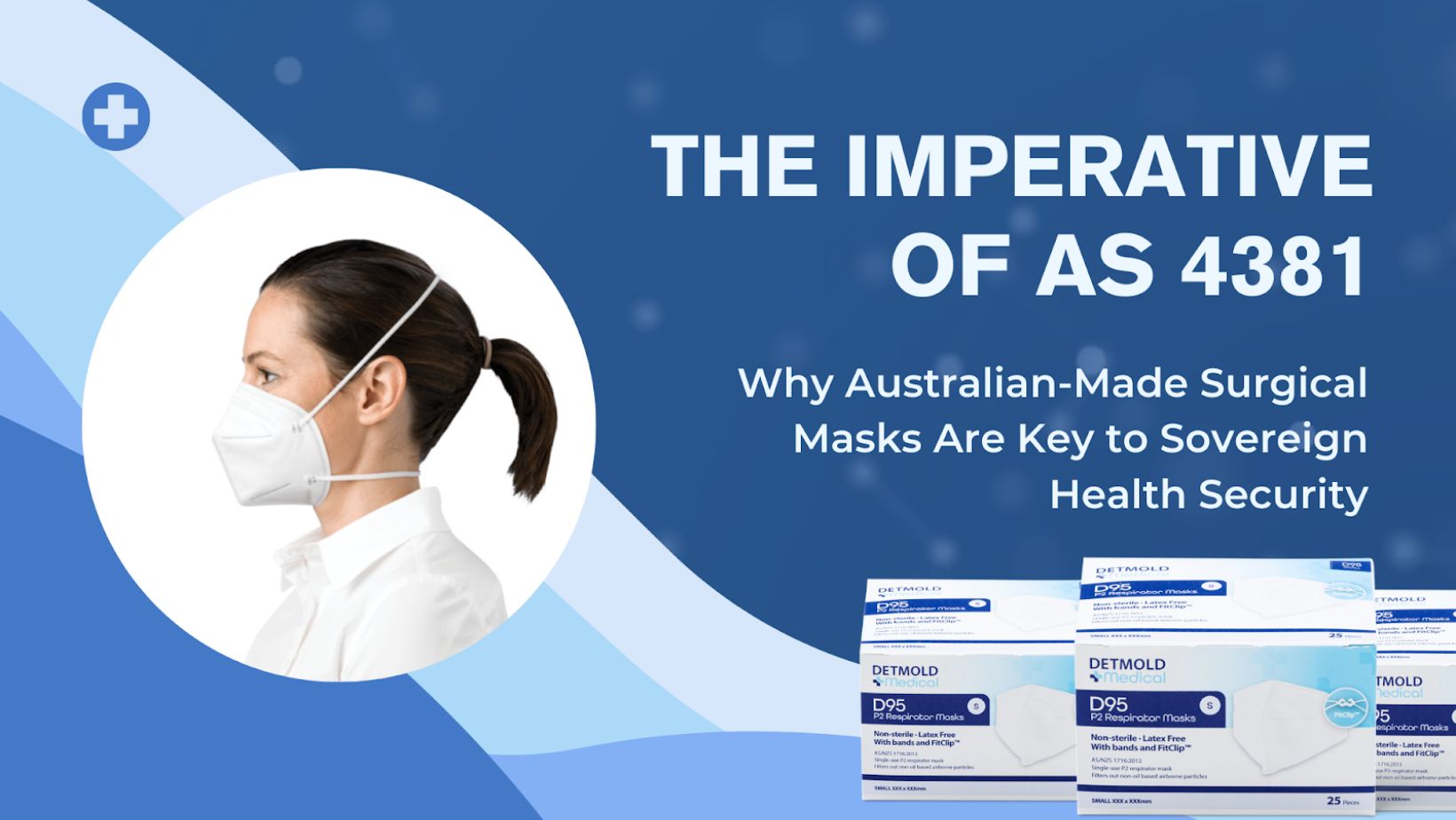
The Pandemic-Induced PPE Wake-Up Call
The COVID-19 pandemic delivered a stark, unforgettable lesson in national security: our reliance on complex, often fragile overseas PPE supply chains constituted a critical vulnerability. As nations engaged in desperate global competition for essential medical equipment in early 2020, Australia, like many others, experienced severe strain on the supply of basic but vital items, most notably surgical masks.
This crisis exposed a profound gap in our Sovereign Health Security, which is defined by the nation’s capacity to protect the health of its population without undue reliance on external forces, particularly during global emergencies. The linkage is clear: essential medical supplies, such as high-quality surgical masks, are the frontline defense for health workers and the public.
Thesis statement: To forge a truly resilient future, Australian sovereignty demands a secure, high-standard domestic manufacturing base for surgical masks, specifically those adhering to the rigorous Australian Standard AS 4381:2015. This is not merely an economic preference, but a strategic health defense mechanism.
Deconstructing AS 4381: The Benchmark of Protection
The Australian Standard AS 4381:2015 (Single-use surgical face masks) is the mandatory national specification that dictates the performance requirements for surgical masks used in clinical settings. It is the uncompromising benchmark for quality and safety. Unlike various international standards, AS 4381 provides a guaranteed level of performance essential for safe practice.
The standard classifies masks into three levels of protection, determined by three key, measurable criteria:
- Bacterial Filtration Efficiency (BFE): The percentage of bacteria filtered out by the mask material. AS 4381 mandates a minimum of 95% BFE for Level 1, 98% for Level 2, and 98% for Level 3 Protection.
- Differential Pressure (Delta P): A measure of the mask’s breathability or air flow resistance, expressed in $\text{mm H}_2\text{O}/\text{cm}^2$. A lower Delta P indicates easier breathing. This parameter ensures the mask is comfortable enough for extended wear without compromising filtration.
- Fluid Resistance (Synthetic Blood Penetration): The mask’s ability to resist penetration by high-velocity synthetic blood. This is critical for protecting clinicians from splashes and sprays of potentially infectious material.
We must focus specifically on the requirements for Level 3 Protection, which is defined for high-risk clinical settings such as major surgery and trauma procedures. The Level 3 criteria-set represents the gold standard because it mandates maximum filtration ($>98\%$) combined with the highest level of fluid resistance ($160 \text{mmHg}$), while still maintaining optimal breathability. The ability to guarantee a fluid-resistant breathable level 3 surgical mask is the non-negotiable threshold for protecting staff and maintaining effective infection control in the most demanding environments.
The Manufacturing Advantage: Control and Consistency

Reliance on an unregulated global market for PPE during a crisis presents significant risks, including the proliferation of counterfeit products, inconsistent quality, and rapid price inflation. While some imported masks may claim compliance with various standards (e.g., European EN 14683 or US ASTM F2100), the only way to ensure products consistently meet the specified filtration, breathability, and fluid resistance demanded by our health system is through rigorous local control.
Domestic manufacturing provides this crucial advantage. It allows for direct government oversight, mandatory quality control, auditing, and assurance that every batch adheres strictly to AS 4381. By investing in Australian capability, we secure not only the physical supply but also the technological capability to produce these highly technical goods, creating skilled Australian jobs and strengthening our overall industrial base. The cost is outweighed by the guarantee of performance and certainty.
Strategic Stockpiling and Readiness
A resilient local domestic manufacturing base is the engine room of national crisis readiness. A key function of the National Medical Stockpile (NMS) is its ability to rapidly supply critical items. During the 2020 crisis, lead times for overseas PPE stretched to months. A local manufacturing capability radically transforms this timeline, ensuring rapid scaling and replenishment of the Medical Stockpile during future crises, reducing lead times to mere days or weeks.
Framing the cost of securing a local AS 4381 compliant supply chain is not an expense, but an insurance premium against catastrophic supply failure. The economic and social cost of a healthcare system unable to function due to a lack of essential protection far exceeds the investment required to maintain a baseline level of domestic production capacity. This ensures our Sovereign Health Security is not compromised by geopolitical shifts or global health emergencies.
Conclusion: A Policy Imperative for National Resilience
The lesson of the pandemic is clear and unambiguous: AS 4381 compliance for surgical masks is non-negotiable for both clinical safety and national security. The rigorous, three-tiered testing methodology of the Australian Standard provides the certainty of protection that inconsistent imported alternatives cannot.
Policy must now transition from a crisis-driven response to a permanent strategic commitment. The call to action is immediate: government policy and procurement must prioritize AS 4381-compliant, Australian-made PPE. This strategic policy shift will embed resilience, assure quality, and fundamentally strengthen our pandemic preparedness. A secure domestic supply of Level 3 Protection surgical masks is the most fundamental and visible investment we can make in the future health and security of the Australian nation.












Discussion about this post